The Sewer Lateral Exemption That Doesn't Apply to Almost Any Almaden Valley Home
August 20, 2026
August 20, 2026
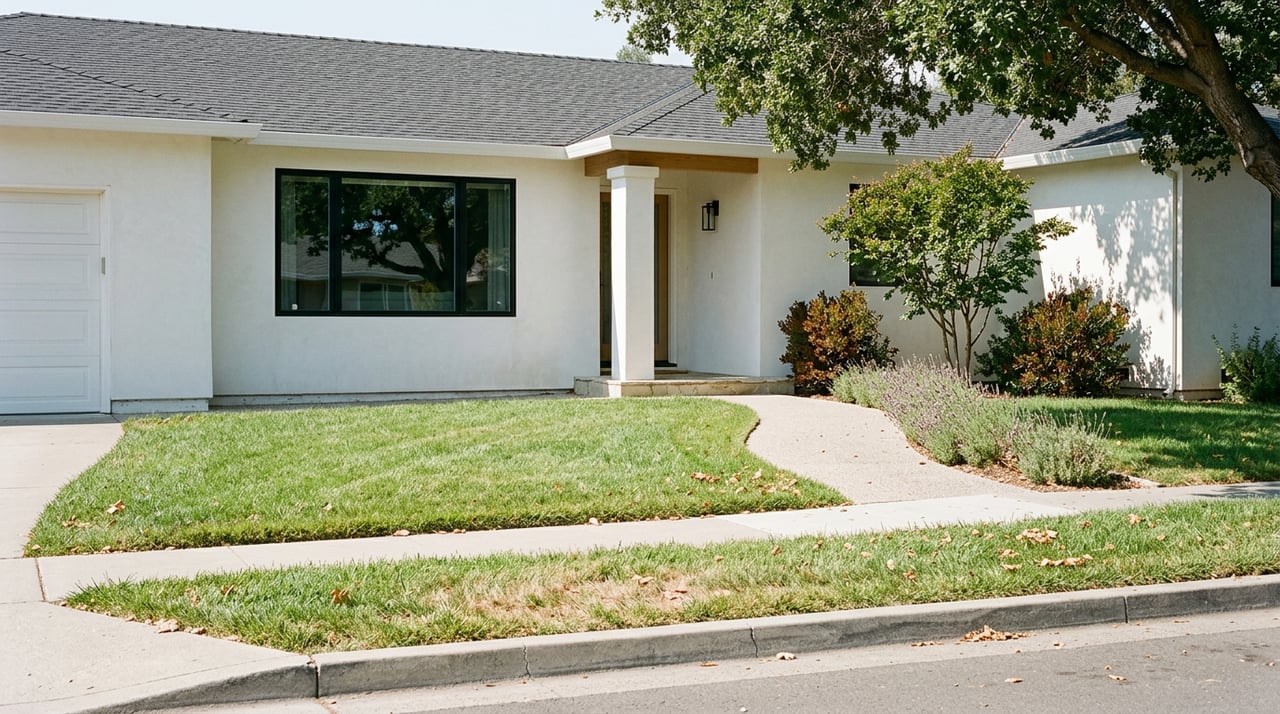
Ask most Almaden Valley homeowners about San Jose's sewer lateral inspection rule and you'll get the same response: "Doesn't that only apply to older homes?" It's a reasonable guess. The city's own ordinance carves out an exemption for anything built within 15 years of June 1, 2022, which sounds like it should cover a meaningful slice of the neighborhood.
It doesn't. The exemption cuts off at homes built after June 2007. Census-based housing data puts the median construction year across Almaden Valley at 1976, which means the typical home here missed that cutoff by three decades. A subdivision like Glenview Serenity, near the heart of the valley, has 63.4 percent of its houses built in the 1970s. Woodside of Almaden traces back to 1977, with an average build year around 1980. These aren't outliers. They're close to the neighborhood's center of gravity.
That gap between what sellers assume and what the ordinance actually says is the reason this post exists. If you're preparing to list a home in Almaden Valley, the sewer lateral inspection isn't a formality you'll likely skip. It's almost certainly something you'll need to complete, and the age of the pipe underneath your lawn has real bearing on what that inspection finds.
Since June 2022, the City of San Jose has required a Private Sewer Lateral Pipe inspection, commonly called PSLP, for residential property sales citywide. The requirement is straightforward on paper: before the sale can close, the sewer lateral connecting the home to the public main has to be inspected by camera, and if the camera finds a failure, the repair has to be completed and verified before the city issues clearance.
Responsibility is split. The homeowner is on the hook for the upper lateral, the section running from the house toward the street. The city handles the lower portion, provided there's an approved cleanout at the property line. Without that cleanout in place, the whole line typically falls to the homeowner's side of the ledger.
A handful of situations exempt a property from the requirement: homes not connected to city sewer service, properties transferred as gifts between immediate family, refinances that don't change title, and homes with a valid PSLP certificate issued within the past 10 years. The age exemption is the one most sellers hope applies to them. For Almaden Valley, it rarely does.
The exemption cutoff isn't the only reason median construction year matters here. It also tells you what kind of pipe is likely in the ground.
Homes built before or around the 1960s in this part of the Bay Area typically used clay pipe, which becomes brittle and prone to cracking at the joints over time. Cast iron came into common use in the 1970s. Plastic pipe, the most durable of the three, wasn't standard until the 1980s. Almaden Valley's median build year sits squarely in the cast iron decade, and pockets of the neighborhood built even earlier may still carry clay.
None of this means every Almaden lateral is failing. It means the inspection is more likely to turn up something than it would in a neighborhood built after 2007, where PVC is standard and the age exemption actually functions as intended. Sellers here are working with 1970s infrastructure under a rule written with newer construction in mind.
The PSLP requirement isn't universal across the markets this team covers, and the differences are sharp enough to matter if you're comparing notes with a friend who sold in a neighboring city.
| City | Point-of-sale sewer lateral inspection | Who repairs a failed lateral |
|---|---|---|
| San Jose (Almaden Valley, Cambrian Park, Willow Glen) | Required since June 2022 | Homeowner repairs upper lateral, city repairs lower portion with an approved cleanout |
| Morgan Hill | Required since June 2022 | Homeowner responsible for the entire lateral, inspection limited to certified firms |
| Los Gatos | Not required | Homeowner owns the pipe, but no inspection is triggered by a sale |
| Saratoga | Not required | Homeowner owns the pipe, but no inspection is triggered by a sale |
A seller moving from a home in Los Gatos or Saratoga into Almaden Valley, or the reverse, is stepping into a completely different set of pre-close obligations. Neither city requires the inspection at all, so there's no equivalent line item to compare against. San Jose's rule is its own animal, and it applies the same way whether the home is in Almaden Valley, Cambrian Park, or Willow Glen.
Morgan Hill shares the same June 2022 effective date but assigns the entire lateral, not just the upper portion, to the homeowner, and only allows certified firms to perform the inspection. It's a reminder that "the sewer lateral rule" isn't one rule across Silicon Valley. It changes at the city line.
If the camera finds a problem, the numbers get real quickly. Bay Area pricing in 2026 puts a standard sewer lateral replacement between $5,000 and $15,000, with the most common all-in range for a full replacement landing between $8,000 and $18,000 once permits, excavation, and surface restoration are included. Complex jobs, the kind involving a street cut, a deep line, or coordination with the city's own crews, can run $15,000 to $30,000 or more.
A few factors that push a project toward the higher end:
Any of this work also requires a city plumbing permit. Skipping that step to save money creates a different problem: unpermitted sewer work can surface as a disclosure issue later in the transaction, and a buyer's inspector or the city itself can require it to be redone at the seller's expense.
The practical fix here isn't complicated. It's timing. Ordering the PSLP inspection before you list, rather than waiting for it to surface during escrow, gives you the camera report and a real repair estimate before offers come in. If the line needs work, you're negotiating from a position where the number is known rather than guessed at by a buyer's agent under contingency pressure.
For a neighborhood built mostly in the 1970s, that lead time matters more than it would in newer construction. A cast iron lateral that's held up fine for fifty years can still fail a camera inspection on cracks or offset joints that never caused a visible backup. Finding that out during your own prep window costs you a few days. Finding it out three weeks into escrow costs you leverage.
Nearly every home built before June 2007 does, unless it falls under one of the other exemptions such as a family transfer or a certificate already issued within the past 10 years. Given the neighborhood's median construction year, that covers the large majority of single-family homes here.
The ordinance requires the certificate before the transfer of title, but who pays for any necessary repair is a matter for the purchase contract, not the ordinance itself. Getting the inspection done early, before you're under contract, gives you room to negotiate that point from a position of knowledge rather than urgency.
No. The only age-based exemption tied to construction date is the June 2007 cutoff. Renovations elsewhere in the home have no bearing on the sewer lateral requirement.
Selling a home built in 1976, or anywhere close to it, means working with what's actually in the ground, not what the exemption language might suggest at first glance. The team at Bouja Swenson Group has walked Almaden Valley sellers through this exact timeline enough times to know where the friction shows up early and how to price the work into a listing plan rather than a last-minute scramble. If you're weighing when to list, get a free market analysis and we'll walk through what your specific street and pipe era are likely to mean for your timeline.
Stay up to date on the latest local happenings and real estate trends.

Having the right team on your side makes all the difference. At Bouja & Swenson Group, we’re ready to connect with you and provide the personalized service you deserve.